COMMENTARY
NEJM
|

David M. Nathan, M.D.
This Journal feature begins with a case vignette highlighting a common clinical problem. Evidence supporting various strategies is then presented, followed by a review of formal guidelines, when they exist. The article ends with the author's clinical recommendations.
After an overnight fast, an asymptomatic 45-year-old Hispanic man has a plasma glucose level of 142 mg per deciliter (7.9 mmol per liter) on initial evaluation and 139 mg per deciliter (7.7 mmol per liter) on reevaluation. Other than a steady gain in weight since college and borderline hypertension, his medical history is unremarkable. He is 175 cm (5 ft 9 in.) tall and weighs 95 kg (209 lb; body-mass index, 31.2), and his blood pressure is 138/88 mm Hg. Physical examination is notable only for abdominal obesity and absent ankle reflexes. How should this patient be treated?
The Clinical Problem
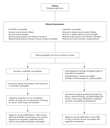
Type 2 diabetes mellitus has become epidemic in the past several decades owing to the advancing age of the population, a substantially increased prevalence of obesity, and decreased physical activity, all of which have been attributed to a Western lifestyle. In the United States, almost 8 percent of the adult population and 19 percent of the population older than the age of 65 years have diabetes.1 There are 800,000 new cases of diabetes per year, almost all of which are type 2. In addition to the risk factors already mentioned, several racial and ethnic groups in the United States are at particularly high risk for diabetes, including blacks, Hispanics, Asians and Pacific Islanders, and Native Americans.2 Given the high prevalence of environmental and genetic risk factors,3 it should come as no surprise that type 2 diabetes is now being diagnosed in young people, including adolescents.4 The clinical course and typical sequence of treatment of type 2 diabetes are outlined in Figure 1.
|
Diabetes mellitus is associated with long-term complications, including retinopathy, nephropathy, and neuropathy.5,6 In the past, type 2 diabetes was considered to be mild and not associated with the same spectrum of complications as type 1 diabetes. Longer survival of patients with type 2 diabetes and development of the disease at an earlier age have increased the risk of development of the duration-dependent complications. Type 2 diabetes is patently not mild; rather, in the United States, it currently contributes to more cases of adult-onset loss of vision, renal failure, and amputation than any other disease. The average delay of four to seven years in diagnosing type 2 diabetes7 translates into approximately 20 percent of patients with type 2 diabetes having some evidence of microvascular or neurologic diabetic complications at the time of diagnosis.8 These complications are influenced not only by the duration of diabetes, but also by the average level of chronic glycemia,9,10 which is measured most reliably with the glycosylated hemoglobin assay. Unfortunately, the relatively high glycosylated hemoglobin values associated with usual care increase the risk of complications.11
As compared with patients without type 2 diabetes, patients with type 2 diabetes � the majority of whom are obese and have hypertension and dyslipidemia � have two to five times the risk of cardiovascular disease.12 Seventy percent of patients with type 2 diabetes die of cardiovascular disease.13 The development of cardiovascular disease appears to precede the development of diabetes itself, in association with subdiabetic levels of hyperglycemia.14,15 In the United States, the estimated cost of providing care for diabetes and its complications is $100 billion per year, with half the cost attributable to direct care.16
Studies have identified several modifiable factors that prevent or slow the progression of the microvascular and neurologic complications.17,18,19,20 The Diabetes Control and Complications Trial demonstrated the potent effects of intensive therapy, with the aim of achieving near-normal glycemia, in decreasing long-term complications in patients with type 1 diabetes.17 Two studies have established the role of intensive therapy in reducing long-term complications in patients with type 2 diabetes.18,19,20 These studies have helped to establish the metabolic goals in patients with type 2 diabetes as a glycosylated hemoglobin value of less than 7 percent, an average fasting plasma glucose level of 90 to 130 mg per deciliter (5.0 to 7.2 mmol per liter), and a postprandial plasma glucose level of less than 180 mg per deciliter (10.0 mmol per liter) (Table 1).21
|
Aggressive treatment of hypertension also reduces the risk of retinopathy, nephropathy, and certain cardiovascular outcomes.25 Reducing low-density lipoprotein cholesterol levels26,27 and reducing triglyceride levels while raising high-density lipoprotein cholesterol levels28 can decrease the risk of cardiovascular disease. The guidelines of the National Cholesterol Education Program23 and the American Diabetes Association24 acknowledge that the presence of diabetes is a risk factor equivalent to having preexisting coronary artery disease29 and have therefore adjusted treatment goals accordingly (Table 1). Intensive glycemic control and aggressive treatment of hypertension and dyslipidemia are particularly demanding in patients with type 2 diabetes; currently, many patients take at least six medications to manage the panoply of risk factors.
Strategies and Evidence
The data from clinical trials demonstrating the benefits of aggressive control of glycemic levels, blood pressure, and abnormal lipid levels call for a comprehensive approach to the treatment of type 2 diabetes that includes the treatment of all of the coexisting risk factors for cardiovascular disease, including smoking. A discussion of the treatment of all coexisting risk factors is beyond the scope of this article; in this regard, the recommendations of the American Diabetes Association,24 National Cholesterol Education Program,23 and the Sixth Report of the Joint National Committee on Prevention, Detection, Evaluation, and Treatment of High Blood Pressure22 and recent reviews30,31 are of value.
The traditional approach to the treatment of diabetes has been a stepwise introduction of nonmedication approaches followed by oral agents (Figure 1). Insulin therapy, despite being the most potent and durable hypoglycemic intervention available, has generally been saved for last, presumably because of the need to administer it by injection. The stepwise strategy has usually been applied at a slow pace with long delays between steps. By the time patients with type 2 diabetes are treated with insulin, they usually have had diabetes for more than 10 to 15 years and have established complications.
Glycemia appears to increase progressively the longer diabetes is present, presumably as a result of decreasing beta-cell function.32 However, at least some beta-cell dysfunction is reversible and insulin secretion can be restored by lowering glycemia, either with diet and exercise or with hypoglycemic medications.33 Restoration of endogenous insulin secretion, which is most likely to occur early in the course of diabetes, is key to improving glycemia. Remissions, characterized by normoglycemia and the absence of the need for hypoglycemic medications, can be achieved,34 although their duration is unknown. Because the usual pace in introducing hypoglycemic therapies is slow, the opportunity to reverse beta-cell dysfunction may be missed.
Diet and Lifestyle Changes
Lifestyle changes, which attempt to reverse or counteract the environmental factors that initiate or exacerbate diabetes in susceptible persons, have great appeal given their low risk and potentially high benefit. Weight loss, achieved with hypocaloric diets, is the primary goal; increased activity has an ancillary role. Plasma glucose levels fall with hypocaloric diets, before weight loss occurs, and levels can decline into the near-normal range with a weight loss of even 2.3 to 4.5 kg (5 to 10 lb).35 Unfortunately, many changes in lifestyle, like most dietary interventions for the treatment of obesity, are short-lived. The most dramatic and lasting reversals of the diabetic state have followed extensive, prolonged weight loss, as occurs after bariatric surgery.36 Although most dietary programs do not result in sustained weight loss, efforts to lose weight and increase activity levels are critical for several reasons. The cost�benefit ratio is high for the small fraction of the population with type 2 diabetes who can lose weight and keep it off, hypoglycemic medications are more effective if the weight gain that commonly accompanies their use is limited, and such lifestyle changes are likely to have other benefits, including amelioration of risk factors for cardiovascular disease.
Oral Agents
For patients who are unable to change their lifestyle through weight loss and increased activity level and for those who make these changes but continue to have glycemia above the target range, a variety of oral agents are now available (Table 2). The sulfonylureas and the biguanide metformin are the oldest and most commonly used classes of oral hypoglycemic drugs.37,38 They have different mechanisms of action (sulfonylureas stimulate insulin secretion and biguanides predominantly decrease hepatic glucose output), but have a similar hypoglycemic effect: they both lower the glycosylated hemoglobin value by approximately 1.5 percentage points. The glitinides are nonsulfonylurea drugs that stimulate insulin secretion in a manner similar to that of the sulfonylureas but their onset of action is faster and their duration of action is briefer, so they must be given before each meal.39 Sulfonylureas and metformin appear to have a limited duration of effectiveness, with most patients requiring a change or additional medications after five years of therapy.40 Where sulfonylureas and metformin diverge is in their respective adverse effects (Table 2). In appropriately selected patients, metformin may be the oral hypoglycemic agent of first choice, since it achieves a level of glucose control similar to that of the sulfonylureas without the same risk of weight gain or hypoglycemia.
|
Other oral hypoglycemic medications have become available in the past five years, but they largely have a supporting role rather than a primary role as monotherapy. The -glycosidase inhibitors work by inhibiting the absorption of carbohydrates in the small intestine, resulting in lower glycemic profiles postprandially. For patients who can tolerate the common gastrointestinal side effects, these agents lower glycosylated hemoglobin values by 0.5 to 1.0 percentage points.41 The thiazolidinediones are peroxisome-proliferator�activated receptor agonists that increase peripheral glucose uptake and lower glycosylated hemoglobin values moderately when they are used as monotherapy.42,43 The main role of these agents may be as part of combination therapy, as described below.
Insulin
Insulin is the oldest of the hypoglycemic agents. It is also the only one that occurs naturally in humans and has no upper dose limit. Higher doses of insulin virtually always result in lower glucose levels, and numerous studies have demonstrated that glycemic levels are nearly normal when adequate doses of insulin are used.44,45,46,47,48 Although insulin is theoretically the most potent of the drugs, it is often not used in the doses necessary to achieve recommended glycemic goals. The risks of insulin therapy include weight gain (like all of the hypoglycemic agents, except metformin), hypoglycemia, and in very rare cases, allergic and cutaneous reactions. The chief barrier to its use, especially early in the course of diabetes treatment, appears to be the reluctance to use an injectable drug; fear of weight gain and hypoglycemia may also be disincentives. However, severe hypoglycemia is extremely rare,18,19,44,45,46,47,48 as compared with its frequency during intensive treatment in patients with type 1 diabetes.17 Moreover, insulin injections are generally painless and considerably less uncomfortable than finger-stick testing of glucose levels, whose use has been widely promulgated and adopted. Regardless of the reason, insulin therapy is often reserved as a last resort.
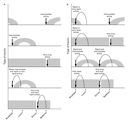
Since relatively few studies have compared the various insulin regimens (Figure 2), there are insufficient data to help determine the best one. The most common theme of successful insulin therapy is the use of a sufficiently large dose of insulin (typical range, 0.6 to more than 1.0 U per kilogram of body weight per day) to achieve or approach normoglycemia, rather than any specific pattern of insulin administration. Once-daily injections of intermediate-acting or long-acting insulins at bedtime19,44 or before breakfast,45 daily or twice-daily combinations of intermediate- and rapid-acting insulins,46 and more complex regimens18,48 have been used to good effect. Although insulin therapy has not traditionally been implemented early in the course of type 2 diabetes, there is no reason why it should not be. Early initiation of insulin therapy has resulted in remissions in patients with type 2 diabetes.34
|
Combination Therapy
The disappointing results with monotherapy, especially the worsening metabolic control often seen within five years after the initiation of an oral hypoglycemic agent,49 have led to the use of combination therapy. The principle behind combination therapy should be to use drugs with different mechanisms of action. The first commonly used combination regimen � insulin at bedtime and sulfonylurea during the day � combined two drugs that increased insulin levels. Predictably, this combination was not synergistic; similar results could usually be obtained, at a lower cost, solely by increasing the dose of insulin.50 Myriad other combinations have proved to be more effective than the use of either drug alone. Sulfonylurea and metformin,51 insulin and metformin,52 thiazolidinediones and either metformin53 or insulin,54 and any of the drugs plus acarbose41 are among the combinations that can improve glycemic control. In general, when such drugs are combined, the adverse-event profile resembles that of the more problematic drugs.
Other Potential Approaches
Potential additions to the armamentarium include inhaled insulin,55 new insulin secretagogues, and better weight-loss agents. All of these agents face substantial delays before they become available.
Even with improved therapies, the magnitude of the diabetes epidemic makes prevention a critical goal. The Diabetes Prevention Program investigators and other groups of researchers have recently demonstrated that lifestyle changes and metformin or acarbose therapy can prevent or delay the development of diabetes by 25 to 58 percent in high-risk patients with impaired glucose tolerance.56,57,58
Areas of Uncertainty
The progressive worsening of the metabolic state and the seeming resistance to beta-cell salvage that occur over time suggest that more aggressive treatment of type 2 diabetes may be warranted early in its course. Whether the earlier application of combination therapy, insulin, or both will be effective in maintaining near-normal glycemia over the long term is unknown. The cost effectiveness of this approach, as compared with waiting to implement more intensive therapy, requires careful examination. Similarly, the practicality and cost effectiveness of even earlier intervention to prevent diabetes must be determined. Finally, studies to determine the effects of earlier and more aggressive management or prevention of diabetes on the risk of cardiovascular disease, the long-term complication with the greatest human cost, will be necessary to understand the influence of these interventions on public health. Only with answers to these questions in hand will we be able to select the most effective course.
Guidelines
Therapeutic goals and guidelines for the management of type 2 diabetes have been advanced by the American Diabetes Association,24 National Cholesterol Education Program,23 and the Sixth Report of the Joint National Committee on Prevention, Detection, Evaluation, and Treatment of High Blood Pressure22 (Table 1). Some of these guidelines are supported by excellent-quality data from clinical trials, whereas others are based on extrapolation from studies in persons without diabetes or epidemiologic data. Their implementation should not be delayed, even though the data to support them remain incomplete.
Conclusions and Recommendations
Type 2 diabetes, a chronic degenerative disease of epidemic proportions, is one of the major challenges to public health in the United States and elsewhere. Although effective interventions to reduce the long-term complications are available, the complex interventions required and the size of the diabetic population have made the application of such therapies problematic. The treatment of patients with type 2 diabetes of relatively recent onset � especially young people with a long projected life span such as the patient described in the case vignette � should include lifestyle interventions to address hyperglycemia, hypertension, and dyslipidemia. If such interventions do not achieve the goals established by controlled clinical trials, I recommend accelerated implementation of the known effective treatments. For example, if after a three-to-six-month program of diet and increased exercise, glycosylated hemoglobin values are not less than 7 percent, medications should be added. One could consider using metformin as a first agent, since it is less likely to cause weight gain. If the treatment goals continue to be elusive, the addition of insulin or other medications should be considered. Whatever the choice of medications, the usual slow transition from one treatment to the next should be avoided. Similarly, aggressive treatment of hypertension and dyslipidemia is warranted. Renewed or continued attention to lifestyle modification should be encouraged at every step of diabetes intervention to try to limit the weight gain that accompanies treatment with most of the medications. With the prospect of 800,000 new cases of type 2 diabetes per year, primary prevention is an obvious strategy that has recently been recommended.59
Dr. Nathan reports receiving support from GlaxoSmithKline. He
is one of many investigators in the Diabetes Prevention Program listed
on a patent filed by the National Institute of Diabetes and Digestive
and Kidney Diseases for the use of metformin in the prevention of
type 2 diabetes.
Source Information
From the Diabetes Center and the Department of Medicine, Massachusetts General Hospital and Harvard Medical School, Boston.
Address reprint requests to Dr. Nathan at the MGH Diabetes Center, 50 Staniford St., Suite 340, Boston, MA 02114-2517.
References
- Harris MI, Flegal KM, Cowie CC, et al. Prevalence of diabetes, impaired fasting glucose, and impaired glucose tolerance in U.S. adults. Diabetes Care 1998;21:518-524. [Abstract]
- Diabetes in America. 2nd ed. Washington, D.C.: National Diabetes Data Group, 1995:613-702. (NIH publication no. 95-1468.)
- Lindgren CM, Hirschhorn JN. The genetics of type 2 diabetes. Endocrinologist 2001;11:178-87.
- Sinha R, Fisch G, Teague B, et al. Prevalence of impaired glucose tolerance among children and adolescents with marked obesity. N Engl J Med 2002;346:802-810. [Abstract/Full Text]
- Report of the Expert Committee on the Diagnosis and Classification of Diabetes Mellitus. Diabetes Care 1997;20:1183-1197. [ISI][Medline]
- Nathan DM. Long-term complications of diabetes mellitus. N Engl J Med 1993;328:676-685.
- Harris MI, Klein R, Welborn TA, Knuiman MW. Onset of NIDDM occurs at least 4-7 yr before clinical diagnosis. Diabetes Care 1992;15:815-819. [Abstract]
- Complications in newly diagnosed type 2 diabetic patients and their association with different clinical and biochemical risk factors. Diabetes Res 1990;13:1-11. [Medline]
- The relationship of glycemic exposure (HbA1c) to the risk of development and progression of retinopathy in the Diabetes Control and Complications Trial. Diabetes 1995;44:968-983. [Abstract]
- Stratton IM, Adler AI, Neil HA, et al. Association of glycaemia with macrovascular and microvascular complications of type 2 diabetes (UKPDS 35): prospective observational study. BMJ 2000;321:405-412. [Abstract/Full Text]
- Nathan DM, McKitrick C, Larkin M, Schaffran R, Singer DE. Glycemic control in diabetes mellitus: have changes in therapy made a difference? Am J Med 1996;100:157-163. [ISI][Medline]
- Kannel WB, McGee DL. Diabetes and cardiovascular disease: the Framingham Study. JAMA 1979;241:2035-2038. [ISI][Medline]
- Panzram G. Mortality and survival in type 2 (non-insulin-dependent) diabetes mellitus. Diabetologia 1987;30:123-131. [ISI][Medline]
- Coutinho M, Gerstein HC, Wang Y, Yusuf S. The relationship between glucose and incident cardiovascular events: a metaregression analysis of published data from 20 studies of 95,783 individuals followed for 12.4 years. Diabetes Care 1999;22:233-240. [Abstract]
- Nathan DM, Meigs J, Singer DE. The epidemiology of cardiovascular disease in type 2 diabetes mellitus: how sweet it is . . . or is it? Lancet 1997;350:Suppl 1:SI4-SI9. [ISI][Medline]
- Rubin RJ, Altman WM, Mendelson DN. Health care expenditures for people with diabetes mellitus, 1992. J Clin Endocrinol Metab 1994;78:809A-809F. [Medline]
- The effect of intensive treatment of diabetes on the development and progression of long-term complications in insulin-dependent diabetes mellitus. N Engl J Med 1993;329:978-986.
- Ohkubo Y, Kishikawa H, Araki E, et al. Intensive insulin therapy prevents the progression of diabetic microvascular complications in Japanese patients with non-insulin-dependent diabetes mellitus: a randomized prospective 6-year study. Diabetes Res Clin Pract 1995;28:103-117. [ISI][Medline]
- Intensive blood-glucose control with sulphonylureas or insulin compared with conventional treatment and risk of complications in patients with type 2 diabetes (UKPDS 33). Lancet 1998;352:837-853. [ISI][Medline]
- Effect of intensive blood-glucose control with metformin on complications in overweight patients with type 2 diabetes (UKPDS 34). Lancet 1998;352:854-865. [ISI][Medline]
- American Diabetes Association. Standards of medical care for patients with diabetes mellitus. Diabetes Care 2002;25:Suppl 1:S33-S49.
- The Sixth Report of the Joint National Committee on Prevention, Detection, Evaluation, and Treatment of High Blood Pressure. Arch Intern Med 1997;157:2413-2446. [ISI][Medline]
- Executive Summary of the Third Report of the National Cholesterol Education Program (NCEP) Expert Panel on Detection, Evaluation, and Treatment of High Blood Cholesterol in Adults (Adult Treatment Panel III). JAMA 2001;285:2486-2497. [ISI][Medline]
- Management of dyslipidemia in adults with diabetes. Diabetes Care 2002;25:Suppl 1:S74-S77.
- Tight blood pressure control and risk of macrovascular and microvascular complications in type 2 diabetes: UKPDS 38. BMJ 1998;317:703-713. [Abstract/Full Text]
- Goldberg RB, Mellies MJ, Sacks FM, et al. Cardiovascular events and their reduction with pravastatin in diabetic and glucose-intolerant myocardial infarction survivors with average cholesterol levels: subgroup analyses in the Cholesterol and Recurrent Events (CARE) trial. Circulation 1998;98:2513-2519. [Abstract/Full Text]
- Pyorala K, Pedersen TR, Kjekshus J, Faergeman O, Olsson AG, Thorgeirsson G. Cholesterol lowering with simvastatin improves prognosis of diabetic patients with coronary heart disease: a subgroup analysis of the Scandinavian Simvastatin Survival Study (4S). Diabetes Care 1997;20:614-620. [Abstract]
- Rubins HB, Robins SJ, Collins D, et al. Gemfibrozil for the secondary prevention of coronary heart disease in men with low levels of high-density lipoprotein cholesterol. N Engl J Med 1999;341:410-418. [Abstract/Full Text]
- Haffner SM, Lehto S, Ronnemaa T, Pyorala K, Laakso M. Mortality from coronary heart disease in subjects with type 2 diabetes and in nondiabetic subjects with and without prior myocardial infarction. N Engl J Med 1998;339:229-234. [Abstract/Full Text]
- Arauz-Pacheco C, Parrott MA, Raskin P. The treatment of hypertension in adult patients with diabetes. Diabetes Care 2002;25:134-147. [Full Text]
- Haffner SM. Management of dyslipidemia in adults with diabetes. Diabetes Care 1998;21:160-178. [Abstract]
- U. K. Prospective Diabetes Study 16. Overview of 6 years' therapy of type II diabetes: a progressive disease. Diabetes 1995;44:1249-1258. [Abstract]
- Nathan DM. Insulin treatment of non-insulin dependent diabetes mellitus. In: Porte D, Sherwin R, eds. Ellenberg and Rifkin's diabetes mellitus. 6th ed. New York: McGraw-Hill, 2002:515-22.
- Ilkova H, Glaser B, Tunckale A, Bagriacik N, Cerasi E. Induction of long-term glycemic control in newly diagnosed type 2 diabetic patients by transient intensive insulin treatment. Diabetes Care 1997;20:1353-1356. [Abstract]
- Hadden DR, Montgomery DAD, Skelly RJ, et al. Maturity onset diabetes mellitus: response to intensive dietary management. Br Med J 1975;3:276-278. [ISI][Medline]
- Pories WJ, Swanson MS, MacDonald KG, et al. Who would have thought it? An operation proves to be the most effective therapy for adult-onset diabetes mellitus. Ann Surg 1995;222:339-352. [ISI][Medline]
- Bailey CJ. Biguanides and NIDDM. Diabetes Care 1992;15:755-772. [Abstract]
- Groop L. Sulfonylureas in NIDDM. Diabetes Care 1992;15:737-754. [Abstract]
- Horton ES, Clinkingbeard C, Gatlin M, Foley J, Mallows S, Shen S. Nateglinide alone and in combination with metformin improves glycemic control by reducing mealtime glucose levels in type 2 diabetes. Diabetes Care 2000;23:1660-1665. [Abstract]
- Wright A, Burden ACF, Paisey RB, Cull CA, Holman RR. Sulfonylurea inadequacy: efficacy of addition of insulin over 6 years in patients with type 2 diabetes in the U.K. Prospective Diabetes Study (UKPDS 57). Diabetes Care 2002;25:330-336. [Abstract/Full Text]
- Chiasson JL, Josse RG, Hunt JA, et al. The efficacy of acarbose in the treatment of patients with non-insulin-dependent diabetes mellitus: a multicenter controlled clinical trial. Ann Intern Med 1994;121:928-935. [ISI][Medline]
- Olefsky JM. Treatment of insulin resistance with peroxisome proliferator-activated receptor gamma agonists. J Clin Invest 2000;106:467-472. [Full Text]
- Inzucchi SE, Maggs DG, Spollett GR, et al. Efficacy and metabolic effects of metformin and troglitazone in type II diabetes mellitus. N Engl J Med 1998;338:867-872. [Abstract/Full Text]
- Cusi K, Cunningham GR, Comstock JP. Safety and efficacy of normalizing fasting glucose with bedtime NPH insulin alone in NIDDM. Diabetes Care 1995;18:843-851. [Abstract]
- Nathan DM, Roussell A, Godine JE. Glyburide or insulin for metabolic control in non-insulin-dependent diabetes mellitus: a randomized, double-blind study. Ann Intern Med 1988;108:334-340. [ISI][Medline]
- Abraira C, Colwell JA, Nuttall FQ, et al. Veterans Affairs Cooperative Study on glycemic control and complications in type II diabetes (VA CSDM): results of the feasibility trial. Diabetes Care 1995;18:1113-1123. [Abstract]
- Rosenstock J, Schwartz SL, Clark CM Jr, Park GD, Donley DW, Edwards MB. Basal insulin therapy in type 2 diabetes: 28-week comparison of insulin glargine (HOE 901) and NPH insulin. Diabetes Care 2001;24:631-636. [Abstract/Full Text]
- Saudek CD, Duckworth WC, Giobbie-Hurder A, et al. Implantable insulin pump vs multiple-dose insulin for non-insulin-dependent diabetes mellitus: a randomized clinical trial. JAMA 1996;276:1322-1327. [ISI][Medline]
- Turner RC, Cull CA, Frighi V, Holman RR. Glycemic control with diet, sulfonylurea, metformin, or insulin in patients with type 2 diabetes mellitus: progressive requirement for multiple therapies (UKPDS 49). JAMA 1999;281:2005-2012. [ISI][Medline]
- Genuth SM. Treating diabetes with both insulin and sulfonylurea drugs: what is the value? Clin Diabetes 1987;5:74-9.
- DeFronzo R, Goodman AM. Efficacy of metformin in patients with non-insulin-dependent diabetes mellitus. N Engl J Med 1995;333:541-549. [Abstract/Full Text]
- Yki-Jarvinen H, Ryysy L, Nikkila K, Tulokas T, Vanamo R, Heikkila M. Comparison of bedtime insulin regimens in patients with type 2 diabetes mellitus: a randomized controlled trial. Ann Intern Med 1999;130:389-396. [ISI][Medline]
- Fonseca V, Rosenstock J, Patwardhan R, Salzman A. Effect of metformin and rosiglitazone combination therapy in patients with type 2 diabetes mellitus: a randomized controlled trial. JAMA 2000;283:1695-1702. [ISI][Medline]
- Schwartz S, Raskin P, Fonseca V, Graveline JF. Effect of troglitazone in insulin-treated patients with type II diabetes mellitus. N Engl J Med 1998;338:861-866. [Abstract/Full Text]
- Cefalu WT, Skyler JS, Kourides IA, et al. Inhaled human insulin treatment in patients with type 2 diabetes mellitus. Ann Intern Med 2001;134:203-207. [ISI][Medline]
- The Diabetes Prevention Program Research Group. Reduction in the incidence of type 2 diabetes with lifestyle intervention or metformin. N Engl J Med 2002;346:393-403. [Abstract/Full Text]
- Tuomilehto J, Lindstrom J, Eriksson JG, et al. Prevention of type 2 diabetes mellitus by changes in lifestyle among subjects with impaired glucose tolerance. N Engl J Med 2001;344:1343-1350. [Abstract/Full Text]
- Chiasson J-L, Josse RG, Gorris R, Hanefeld M, Karasik A, Laakso M. Acarbose for prevention of type 2 diabetes mellitus: the STOP-NIDDM randomised trial. Lancet 2002;359:2072-2077. [ISI][Medline]
- American Diabetes Association and National Institute of Diabetes and Digestive and Kidney Diseases. The prevention or delay of type 2 diabetes. Diabetes Care 2002;25:742-749. [Full Text]